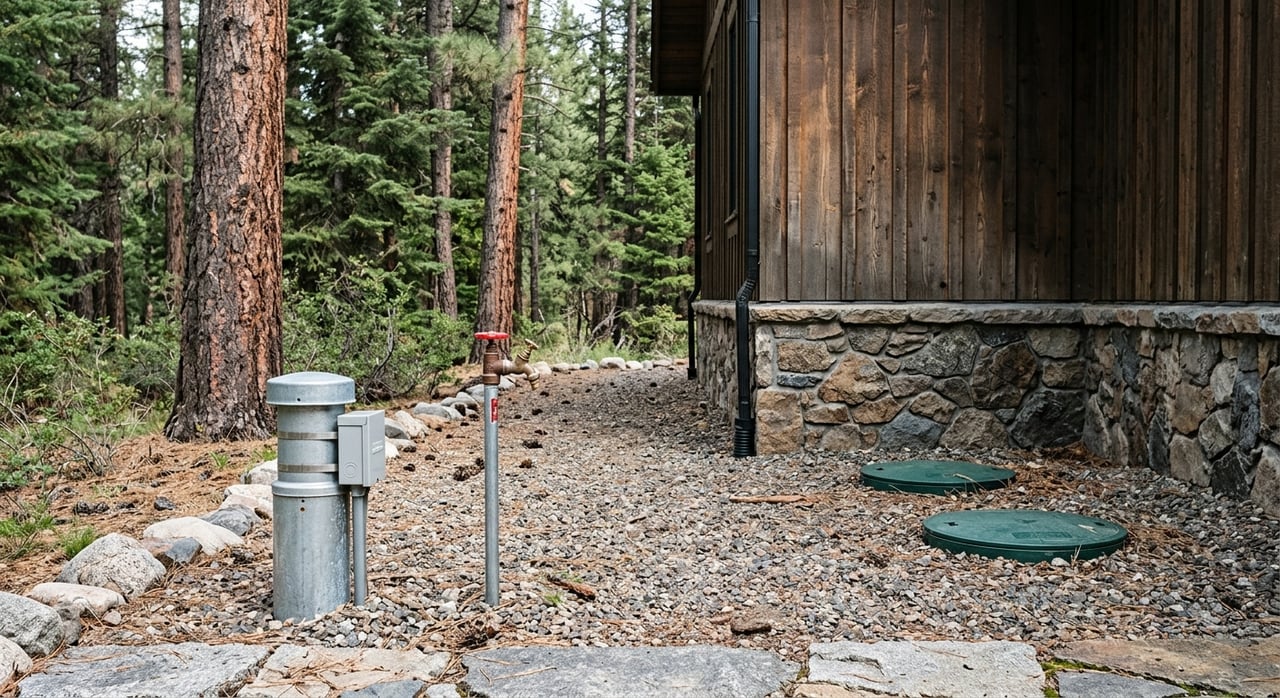
Buying an acreage home in Evergreen can feel exciting right up until you hit the utility questions. If you are used to city water and sewer, terms like well permit, OWTS use permit, and water rights can quickly turn a beautiful mountain property into a complex due diligence project. The good news is that once you break the topic into a few clear categories, you can ask smarter questions, avoid surprises, and move forward with more confidence. Let’s dive in.
Start With Three Separate Issues
For Evergreen-area acreage homes in Jefferson County, it helps to treat wells, septic systems, and water rights as three different issues.
Your water source is one issue. Your wastewater system is another. And the legal authority to use water is a third. According to the Colorado Division of Water Resources, a water right is a property right with a court-confirmed priority date, while the well permit file shows allowable uses and may include construction and pump records. Jefferson County separately regulates onsite wastewater treatment systems, often called OWTS, through use permits and operating permits.
That distinction matters because a property can have a functioning well and septic system, but still raise questions about permitted water use, future expansion, or missing records. If you are considering remodel plans, added bedrooms, or expanded outdoor use, those details deserve early attention.
Jefferson County planning review may also require documents such as a water or sewer letter, well permit, septic information, and a well yield test for certain projects. You can review that county guidance through Jefferson County Planning & Zoning.
Understand Private Well Basics
A private well is not the same as a public water system. The owner is responsible for the well, its maintenance, and the safety of the water.
The Colorado Department of Public Health and Environment notes that private wells are not regulated under the Safe Drinking Water Act, which means you should not assume testing or monitoring happens automatically. Jefferson County recommends an annual checkup by a qualified well contractor and advises owners to test for certain contaminants. You can read more in the county’s well water systems guidance and the state’s private wells overview.
What to Test in Well Water
Jefferson County says typical testing in most areas should include:
- Bacteria
- Nitrate
- Fluoride
The county also notes that groundwater in some areas can contain radiation-related contaminants such as uranium and radium, so parcel-specific screening may make sense depending on the property. Nitrate can be especially important on acreage because it may come from septic systems, horse enclosures, and fertilizer.
If a seller has recent lab results, review them carefully. If testing is outdated, or if the water has odor, staining, or other unusual characteristics, it may be wise to arrange updated testing with a certified private lab.
Well Permits Matter More Than Many Buyers Expect
A well does not automatically mean unlimited water use. Jefferson County specifically notes that many well permits do not allow irrigation, so you should confirm whether outdoor watering, livestock use, or other planned uses are actually permitted.
The Colorado well permitting page is also clear that additional rules may apply in Denver Basin areas or Designated Basins. That means parcel-specific basin status should be checked rather than assumed.
If a property needs a new or replacement well, timing matters too. The state says complete well permit applications can take up to 49 days, which is one reason to start these questions early in your inspection period.
Know How Septic Systems Work in Jeffco
In Jefferson County, septic systems are regulated as onsite wastewater treatment systems, or OWTS. These systems have their own permit, inspection, and maintenance rules.
Prior to a covered transaction, the owner generally must obtain a use permit for an existing septic system if it was installed more than five years before the sale. In general, a use permit is not required when the system was installed and approved less than five years before closing or before a building permit application. Jefferson County outlines these rules on its OWTS page.
What a Septic Use Permit Usually Requires
For a use-permit application, Jefferson County generally requires:
- A septic tank inspection report from within the prior 12 months
- A mechanical-component inspection report from within the prior 30 days
- A soil-treatment-area report from within the prior 30 days
The county also requires inspectors to hold NAWT certification or an equivalent credential. For higher-level treatment systems, the inspector may need additional training or manufacturer certification.
This is one reason septic due diligence should never be treated as a quick checkbox. The file history, inspection timing, and system type all matter.
Septic Records Can Affect Future Plans
If you may want to add bedrooms or increase wastewater flow later, the county septic file becomes especially important. Jefferson County’s suitability policy says existing installation records must be on file for that type of request to be considered. If no such record exists, the request will not be considered.
For buyers thinking long term, that makes the septic file one of the most important documents to request before closing. A missing file today could limit your options tomorrow.
Watch for Conditional Acceptance
If the county cannot issue a standard use permit, it may issue a conditional acceptance document that includes repair obligations within 90 days. That should be treated as a real financial and legal issue, not a routine administrative detail.
In practical terms, if you see conditional language tied to the septic system, slow down and understand the repair scope, deadlines, and cost before you proceed.
Learn Basic Septic Maintenance Expectations
Routine septic care matters after closing too. The EPA says the average household septic system should be inspected at least every three years and pumped as needed. You can review those recommendations in the EPA’s guide on how to care for your septic system.
Jefferson County also recommends spreading out water use instead of stacking several loads of laundry or multiple showers back to back. That kind of simple daily habit can help reduce stress on the system.
Red Flags to Take Seriously
Jefferson County lists several warning signs that deserve immediate follow-up:
- Backups
- Leaks from the absorption bed
- Ponding liquid
- Strong odors
- Ground depressions or soggy soil around the tank or field
If any of those conditions are present, ask for professional evaluation right away.
Higher-Level Treatment Systems Need Extra Attention
Some properties have higher-level treatment systems rather than more basic septic setups. In Jefferson County, those systems require an operating permit and an operations and maintenance contract, often with service intervals around every six months. The permit must remain current for the life of the system.
That does not make these systems bad. It simply means they come with additional monitoring and maintenance obligations that you should understand before you buy.
Water Rights Basics for Evergreen Buyers
Water rights are often the least understood piece of the puzzle. In Colorado, they are separate legal interests governed under prior appropriation, and they are not something you should assume is fully explained in a listing sheet.
The key question is whether your intended use matches the well permit and any additional water authority tied to the land. According to the Division of Water Resources, if you want use beyond a standard single-family household, a well on less than 35 acres is usually limited to ordinary household use unless it is included in a water-court-decreed augmentation plan. Lawn and garden uses, domestic animals, and subdivision-type uses may require augmentation before a well permit can be obtained. You can review those basics through Ask DWR.
Ownership Records Are Not Always Simple
DWR also says it does not keep official records of water-right or ditch-share ownership transfers. That means buyers should rely on deeds, recorded agreements, water-court decrees, and title work rather than assuming the state can prove ownership history.
If a property includes shared wells, ditch interests, augmentation documents, or off-parcel utility features, document review becomes even more important.
Easements Can Matter Too
If any septic or water-system component crosses a property line, Jefferson County regulations may require easement documentation before permit approval. That can affect not only current use, but future permitting and resale as well.
For acreage homes, it is wise to think beyond the house itself and review how the utility systems physically sit on the land.
Documents to Request Before Closing
For Evergreen acreage purchases, a strong document request can save time and reduce risk. The most useful records often include:
- The well permit number and well permit file, including allowable uses and available construction or pump records
- Recent well-water lab results from a certified lab
- Water-treatment service records or invoices, if applicable
- OWTS use permit, installation permit, and any repair permits
- Pumping receipts and septic inspection reports
- Any higher-level treatment operating permit and maintenance contract, if applicable
- Recorded easements, shared-well agreements, deed references to water rights, or augmentation-plan documents
- Survey, site plan, access easements, and any well yield test tied to county review
When these records are missing, unclear, or inconsistent, that is usually a sign to dig deeper before deadlines expire.
Specialists Worth Involving
Acreage properties often need more than a general home inspection. Depending on the property, you may want to bring in:
- A qualified well contractor or certified private lab if water quality or permitted use is unclear
- A NAWT-certified septic inspector, or equivalent, for system evaluation
- A professional engineer when the system is advanced, records are missing, or future expansion is a goal
- A Colorado water attorney when water rights, augmentation, shared wells, or off-parcel easements are involved
For buyers relocating from urban areas, this is often the biggest mindset shift. Mountain and foothills properties can be extraordinary, but they reward careful, early due diligence.
Why Early Due Diligence Matters
The safest approach is simple: collect the permit file, the septic file, and any water-right or easement documents before your inspection deadlines run out. A well is not a promise of unlimited water. A septic system is not just a hidden utility. And water rights should never be assumed.
If you are comparing Evergreen acreage homes, these details can affect daily use, future improvements, operating costs, and long-term value. Working through them early gives you a clearer picture of what you are buying and helps you make decisions with fewer surprises.
When you want experienced guidance on mountain and acreage properties, Dawn Zalfa brings the detail-oriented, risk-aware approach these transactions demand.
FAQs
What should you review first for an Evergreen acreage property?
- Start with three separate categories: the well permit and water source, the OWTS or septic records, and any documents related to water rights or easements.
What well-water tests are commonly recommended in Jefferson County?
- Jefferson County says typical tests for most areas should include bacteria, nitrate, and fluoride, with additional site-specific screening sometimes appropriate.
What does a well permit tell you for an Evergreen property?
- The well permit file can show allowable uses and may include construction and pump records, which helps you confirm whether the property’s intended use matches the permit.
When is a septic use permit usually required in Jefferson County?
- Before a covered sale, a use permit is generally required for an existing septic system installed more than five years before the transaction.
Why are septic records important if you want to remodel later?
- Jefferson County says existing installation records must be on file if you want to add bedrooms or increase wastewater flow, so missing records can limit future plans.
Do water rights automatically transfer with an Evergreen home sale?
- Not always in a simple way, so buyers should review deeds, recorded agreements, water-court decrees, and title work rather than assume ownership history is obvious.
Can you irrigate or keep animals with any private well in Evergreen?
- No. Many well permits do not allow irrigation, and uses beyond ordinary household use may require additional legal authority such as an augmentation plan.