You can fall in love with the sound of Bear Creek out your window and still keep both feet on solid ground. If you’re eyeing a creekfront cabin in Kittredge, you know the setting is rare. You also know water brings rules, inspections, and insurance questions. This guide gives you a clear, step-by-step way to evaluate risk, read the maps, budget for insurance, and plan inspections without losing momentum. Let’s dive in.
Why Kittredge creekfront feels different
Bear Creek is a steep mountain stream that can rise quickly during spring snowmelt and short, intense storms. The flow can carry debris like logs and boulders, and bank erosion or channel shifts can occur in narrow canyon reaches. For real-time context while you research a specific parcel, check the USGS monitoring gage at Kittredge.
Mountain stream flooding behaves differently than broad river plains. In addition to fast, rising water, post-wildfire conditions can boost debris flow risk and change how a channel moves. Colorado’s statewide guidance explains these processes and why local, site-specific checks matter on steep streams like Bear Creek. See the state’s overview of flood hazards and mountain-stream risks.
Flood maps 101 for Bear Creek
FEMA’s Flood Insurance Study and county FIRM panels set the official flood zones used by lenders and local regulators. In Kittredge, this includes the reach mapped as “Bear Creek (Kittredge to Evergreen).” You can review the technical basis and zone definitions in the county’s FEMA Flood Insurance Study and FIRM panels.
Key terms you will see:
- SFHA: The Special Flood Hazard Area with a 1 percent annual chance flood. This is where lenders often require flood insurance.
- AE or A Zones: Areas in the SFHA. AE zones include published Base Flood Elevations (BFEs).
- X or Shaded X: Areas of reduced risk, often outside the 1 percent annual chance flood.
- Floodway: The channel and adjacent area reserved to convey flood flows. This zone has the strictest development limits.
What the maps do and do not show
Flood maps are a critical starting point, but they are not a site-specific risk audit. Small tributaries, narrow canyon spots, localized scour, and historic channel changes may not be fully reflected. Jefferson County acknowledges these limits and uses supplemental tools for mountain reaches. For official floodplain determinations, Elevation Certificate records, and permitting guidance, work with Jefferson County Floodplain Management.
Quick map checks before you tour
A fast pre-screen can save time:
- Run the address through FEMA’s Map Service Center for current FIRM panel information.
- Confirm county floodplain status and whether the parcel touches the floodway.
- Ask for any existing Elevation Certificate on file. Jefferson County stores Elevation Certificates for many structures built or substantially improved since 2004. You can request copies and ask for a staff-level floodplain determination through the county’s Floodplain Management page.
Insurance and financing realities
If a structure that secures a mortgage from a federally regulated or insured lender is located in an SFHA on the effective FIRM, federal law generally requires flood insurance for the life of the loan. A successful Letter of Map Change can remove the federal mandatory purchase requirement if FEMA accepts it. You can review how Letters of Map Amendment or Revision work in FEMA’s Online LOMC guidance.
An Elevation Certificate often drives accurate NFIP rating and supports LOMA/LOMR requests. If none exists, a licensed land surveyor can produce one. Jefferson County may already hold prior Elevation Certificates tied to the parcel.
When pricing coverage, the state recommends checking both NFIP availability and private-market options and reminds buyers of the typical NFIP waiting period of about 30 days for new policies. Start early and share quotes with your lender during due diligence. See the Colorado Division of Insurance’s consumer flood-insurance guidance.
Jefferson County participates in FEMA’s Community Rating System program. This can reduce NFIP premiums for homeowners in participating jurisdictions. CRS class and discounts can change, so confirm the current status with the county flood office or your insurance agent.
What inspections reveal in creek cabins
Older mountain cabins often show a pattern of moisture and foundation wear that is manageable when caught early and expensive when ignored. Common findings include:
- Evidence of past water intrusion in crawlspaces or lower walls, like staining, efflorescence, or mold. Many issues trace back to grading and gutter maintenance rather than direct overbank flooding.
- Scoured or exposed foundation walls, undermined footings, or new hairline cracks near the bank. These can signal erosion during higher flows.
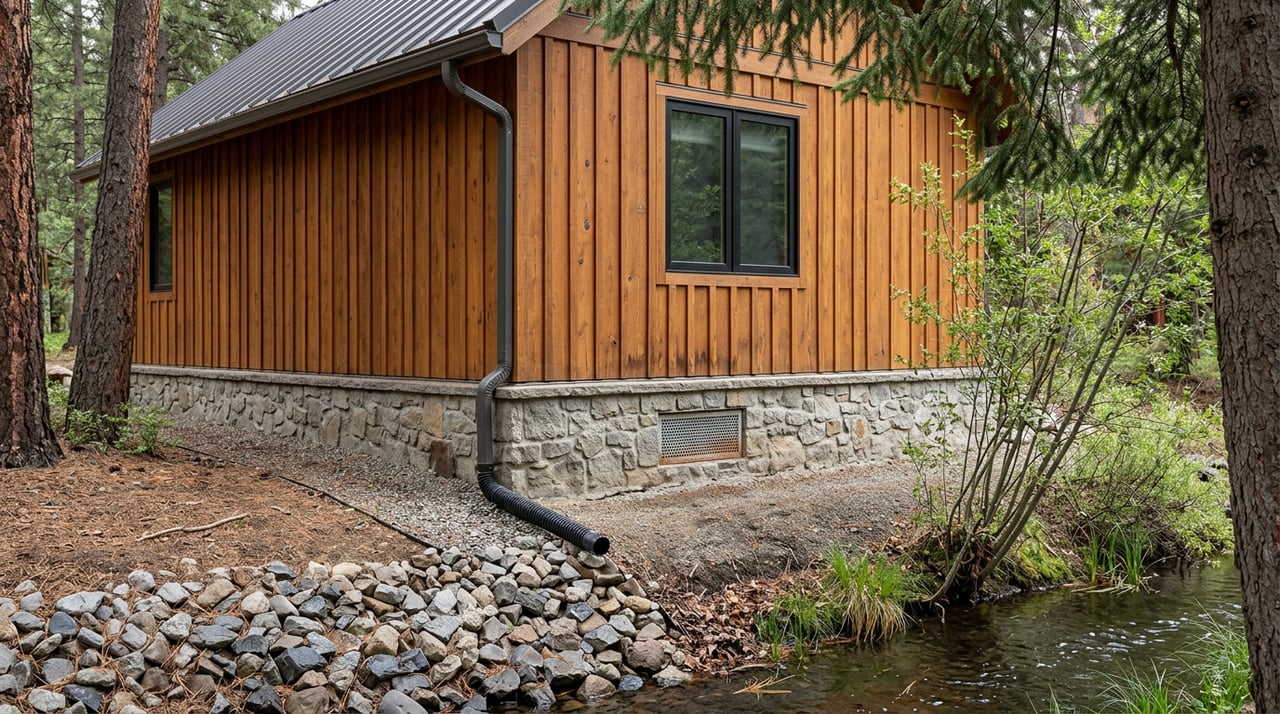
- Inadequate drainage: blocked or undersized driveway culverts, missing cutoffs or French drains, and low spots that send water toward the structure. Work within the mapped floodplain typically requires a county Floodplain Development Permit.
- Sump pumps without backup power or a redundant pump. A simple upgrade can prevent a long list of moisture problems.
- Septic and well concerns: high groundwater or floodwater can inundate drainfields or affect wells. Jefferson County outlines inspection and review steps on its onsite wastewater applications and guides.
- Roof and snow-load wear, chimney or combustible debris near the house, and older mechanicals exposed to damp conditions. FEMA’s homeowner guidance on mitigation, including materials and elevation strategies, is a helpful primer. See FEMA’s P-312 overview of homeowner flood-proofing options.
Go beyond a standard general inspection
Add targeted, site-aware checks to your due diligence:
- Sewer camera scope for older systems, plus a licensed septic evaluation and a full well water quality test.
- A topographic or site survey to produce an Elevation Certificate if one does not exist. If the structure’s lowest adjacent grade or lowest floor sits above the mapped BFE, you may apply for a LOMA. Review FEMA’s Online LOMC instructions with your surveyor.
- Specialist consults when needed. For visible bank erosion, channel questions, or permitting in mapped flood zones, a civil or hydraulic engineer should weigh in. If you see slope movement or settlement, add a geotechnical engineer. For foundation or framing issues, consult a structural engineer.
A smart buyer checklist
Use this ordered, practical workflow to avoid surprises and protect leverage during negotiations.
- First paper pull
- Ask the seller for the Colorado Seller’s Property Disclosure and read Section J (Flooding and Drainage). The state’s Commission-approved form is clear about flood-related items. Here is the official Seller’s Property Disclosure.
- Confirm official map status
- Check the FEMA Map Service Center for current FIRM panels. Then confirm county floodplain status, floodway contact, and any Elevation Certificates on file through Jefferson County Floodplain Management.
- Insurance pre-check
- Obtain flood-insurance quotes early from NFIP and private carriers. If your lender is federally regulated and the home is in the SFHA, coverage will likely be required. If you plan to pursue a LOMA, coordinate a survey and Elevation Certificate first. Use FEMA’s Online LOMC guidance and the state’s flood-insurance consumer page as references.
- Inspection add-ons
- Order, at minimum, a sewer scope, septic inspection, and full well test. Choose a home inspector experienced with streamside and mountain properties. Provide your inspector with the FIRM panel and any Elevation Certificate to focus their review.
- When to require more
- If the parcel sits in or touches the mapped floodway, shows active bank erosion, sits on an alluvial fan, or has a documented history of channel migration, require a site-specific hydraulic study by a civil engineer and a geotechnical report before moving forward. These studies support permitting, mitigation design, and lender or insurer underwriting.
Practical maintenance and mitigation
A little prevention goes a long way on Bear Creek. Routine steps include clearing gutters and downspouts, keeping driveway culverts free of debris, maintaining a stable vegetated buffer along the bank, and moving heavy woody debris away from the channel. Many owners also install sump pumps with battery or generator backup.
Larger projects may be appropriate after expert review and with proper permits. Options include raising utilities or the lowest floor, using flood-resistant materials below the BFE, and engineered bank protection designed by a qualified engineer. FEMA’s homeowner guide summarizes the tradeoffs and costs of common strategies. Review the P-312 overview of mitigation options and materials before you budget.
Remember that Jefferson County prohibits obstructing natural drainage ways, and work within mapped floodplains requires a Floodplain Development Permit. Confirm the need for permits with the county before you grade, place rock, or add structures near the creek.
Situational awareness during storm season
During spring runoff and summer thunderstorms, keep an eye on real-time tools and local context. The USGS gage at Kittredge offers flow and level trends for situational awareness. For a broader view of historic flood behavior and local warning practices, review the regional Bear Creek Flood Warning Plan maintained by the local district. The document provides valuable context for preparedness and response. You can read the plan here: Bear Creek Flood Warning Plan.
Bottom line for Kittredge creekfront buyers
Creekfront living in Kittredge can be a wise, long-term choice when you approach it with clear eyes and good process. Focus on three must-do steps: 1) request and review the Colorado Seller’s Property Disclosure, 2) confirm FEMA and Jefferson County map status and secure an Elevation Certificate, and 3) order early flood-insurance quotes and targeted inspections, adding engineering when the site demands it. With the right team and due diligence, you can enjoy the setting and protect your investment.
If you want legal-grade guidance and a calm, experienced hand from first showing to close, connect with Dawn Zalfa for a confidential consultation tailored to Kittredge creekfront cabins.
FAQs
What is an SFHA and why does it matter in Kittredge?
- The Special Flood Hazard Area is the 1 percent annual chance flood zone shown on FEMA’s maps. If a mortgaged structure lies in the SFHA, lenders generally require flood insurance for the life of the loan.
How do I know if a Kittredge cabin touches the floodway?
- Check the FEMA FIRM panels for the parcel and confirm with Jefferson County Floodplain Management, which can provide staff determinations and any Elevation Certificates on file.
Do I need flood insurance if I pay cash for a creekfront cabin?
- The federal mandatory purchase rule applies when a federally regulated or insured lender is involved, so cash buyers are not subject to that rule, though many still choose coverage based on site risk.
How long does new flood insurance take to start?
- The National Flood Insurance Program typically has about a 30-day waiting period for new policies, so get quotes and bind coverage early in due diligence.
What is an Elevation Certificate and how do I get one in Jefferson County?
- It is a surveyed document showing a structure’s elevation relative to the Base Flood Elevation. The county retains many certificates and a licensed land surveyor can produce a new one if needed.
Can I grade or build near Bear Creek if I own the land?
- Work within the county’s floodplain overlay usually requires a Floodplain Development Permit and must not impede natural drainage, so coordinate early with Jefferson County Floodplain Management.